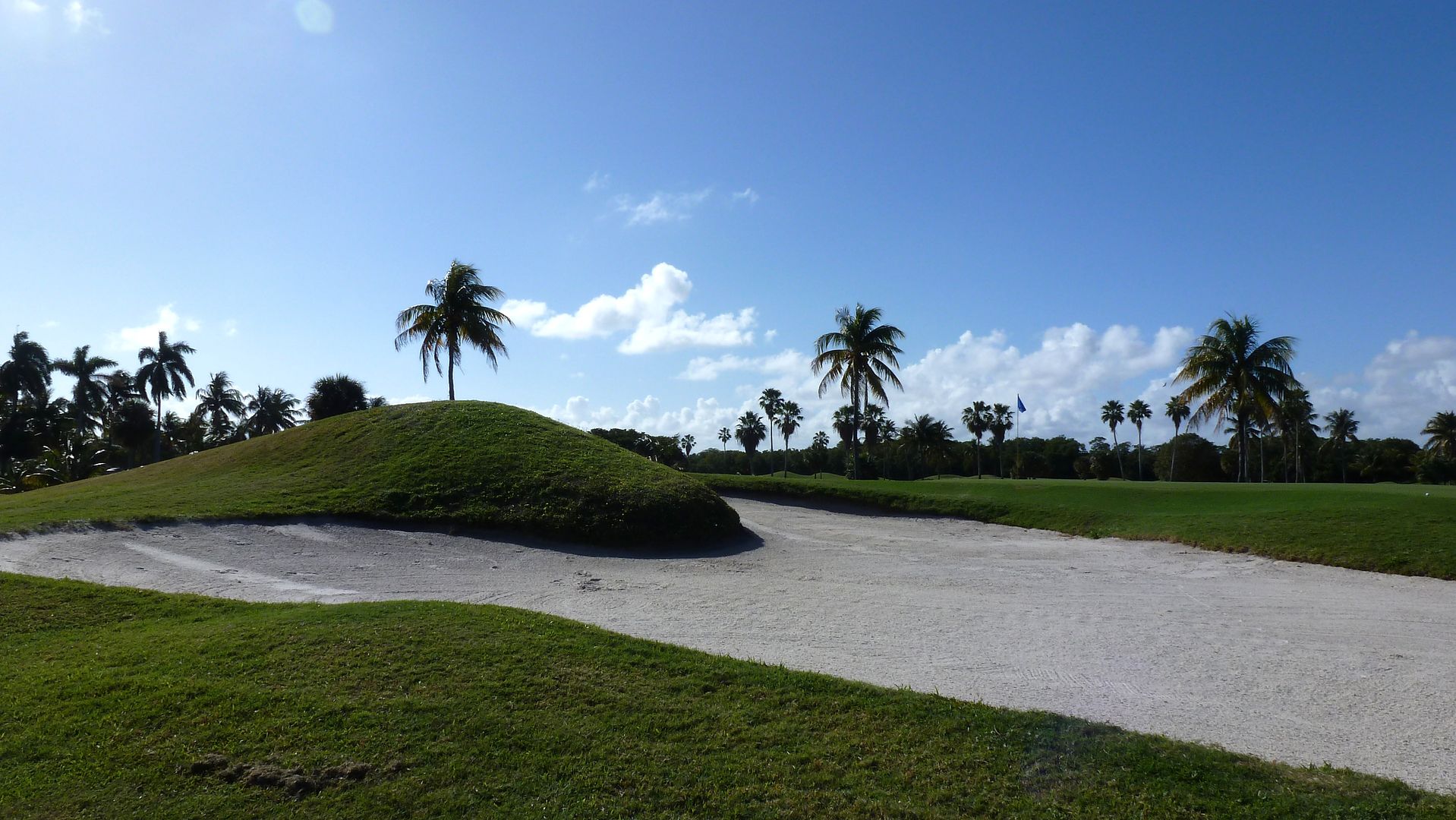
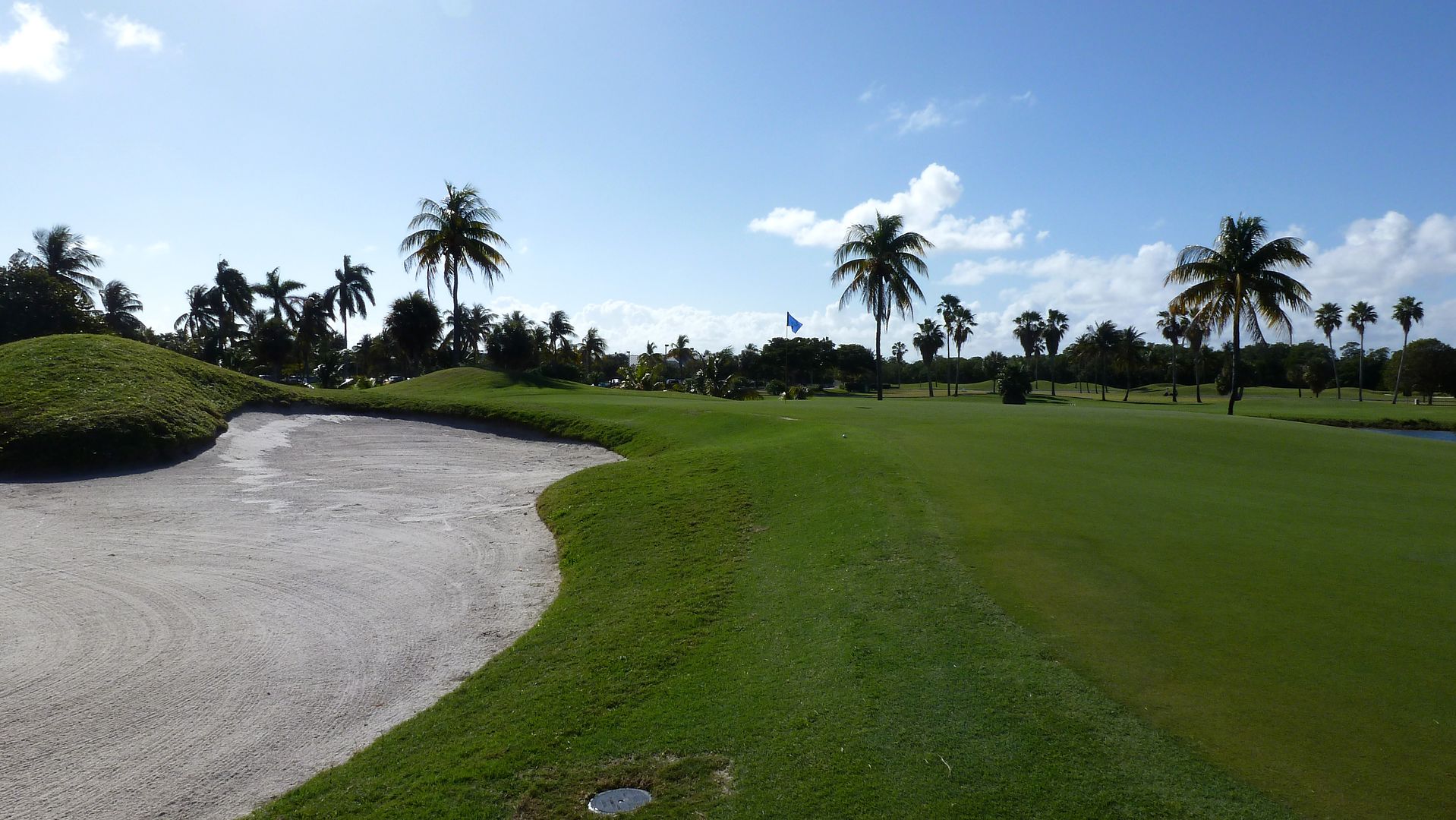
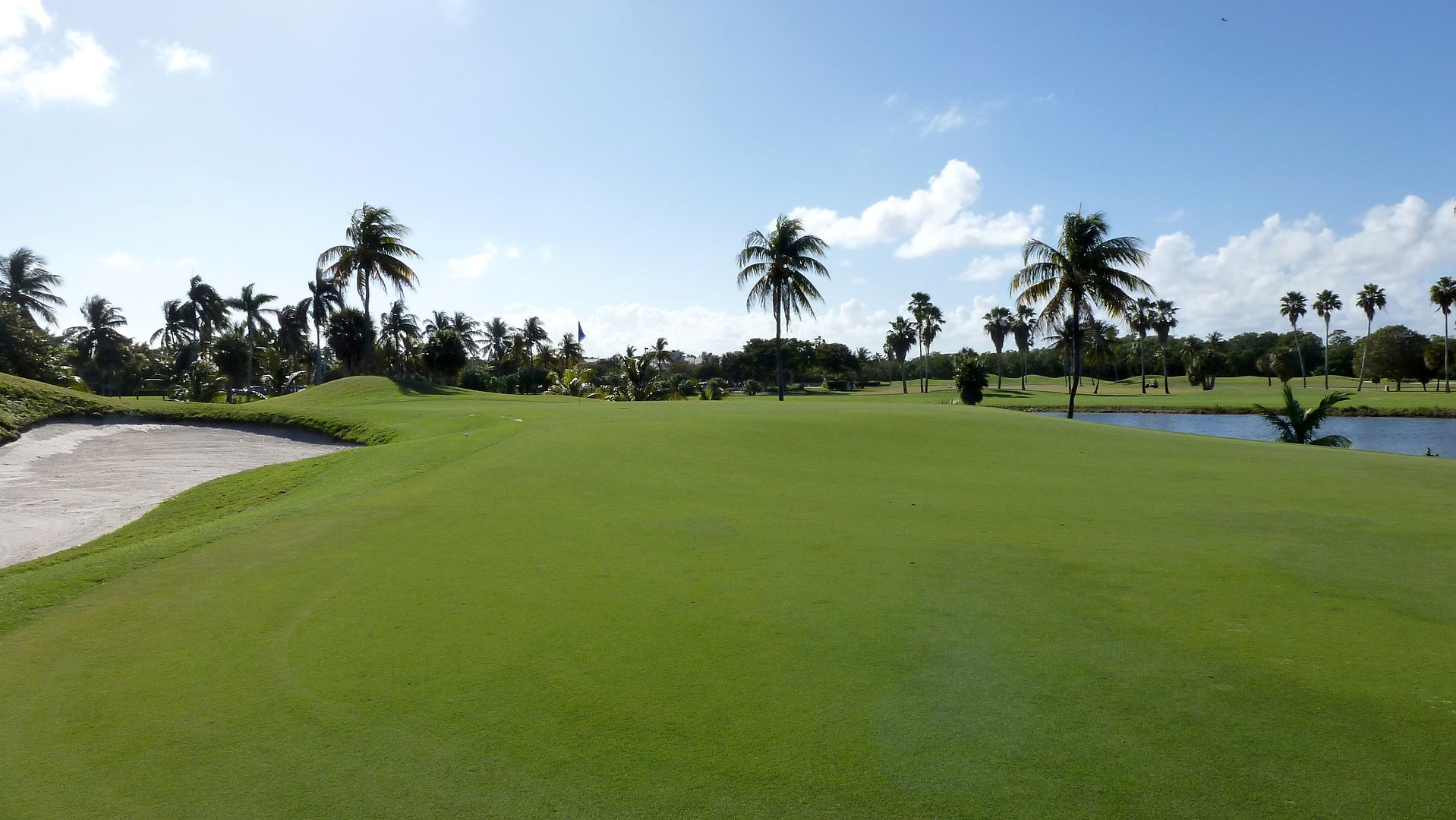
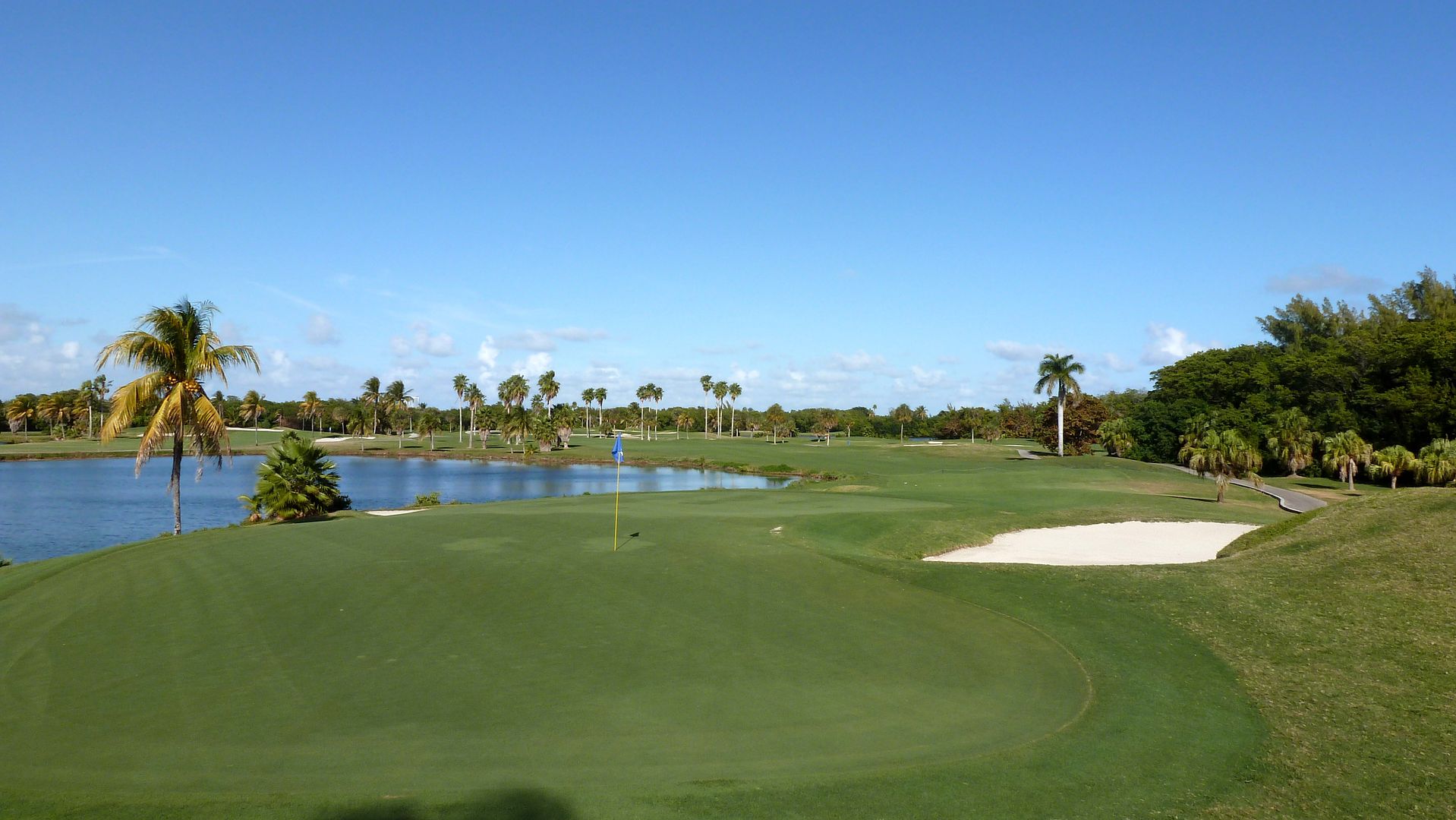
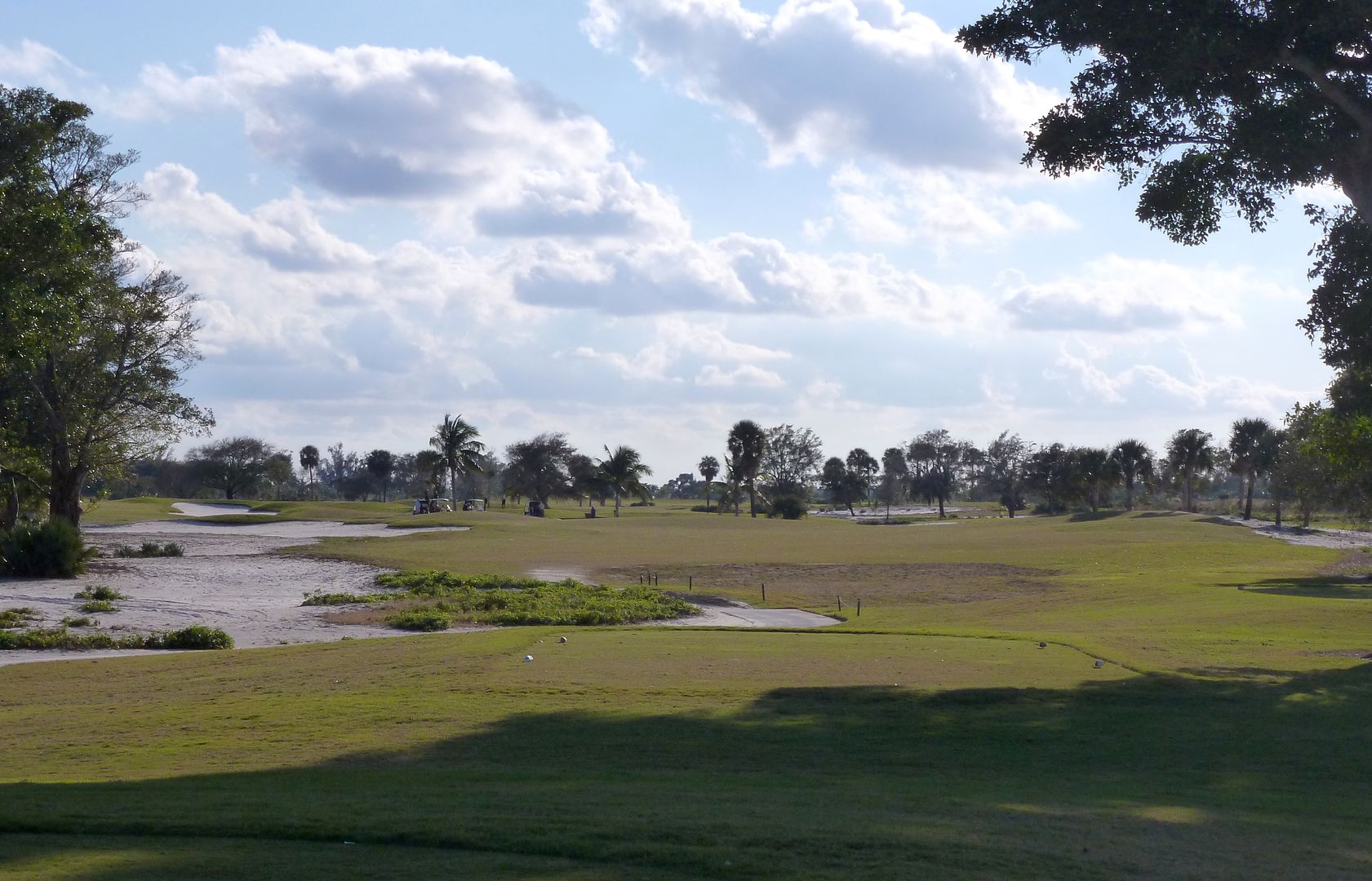
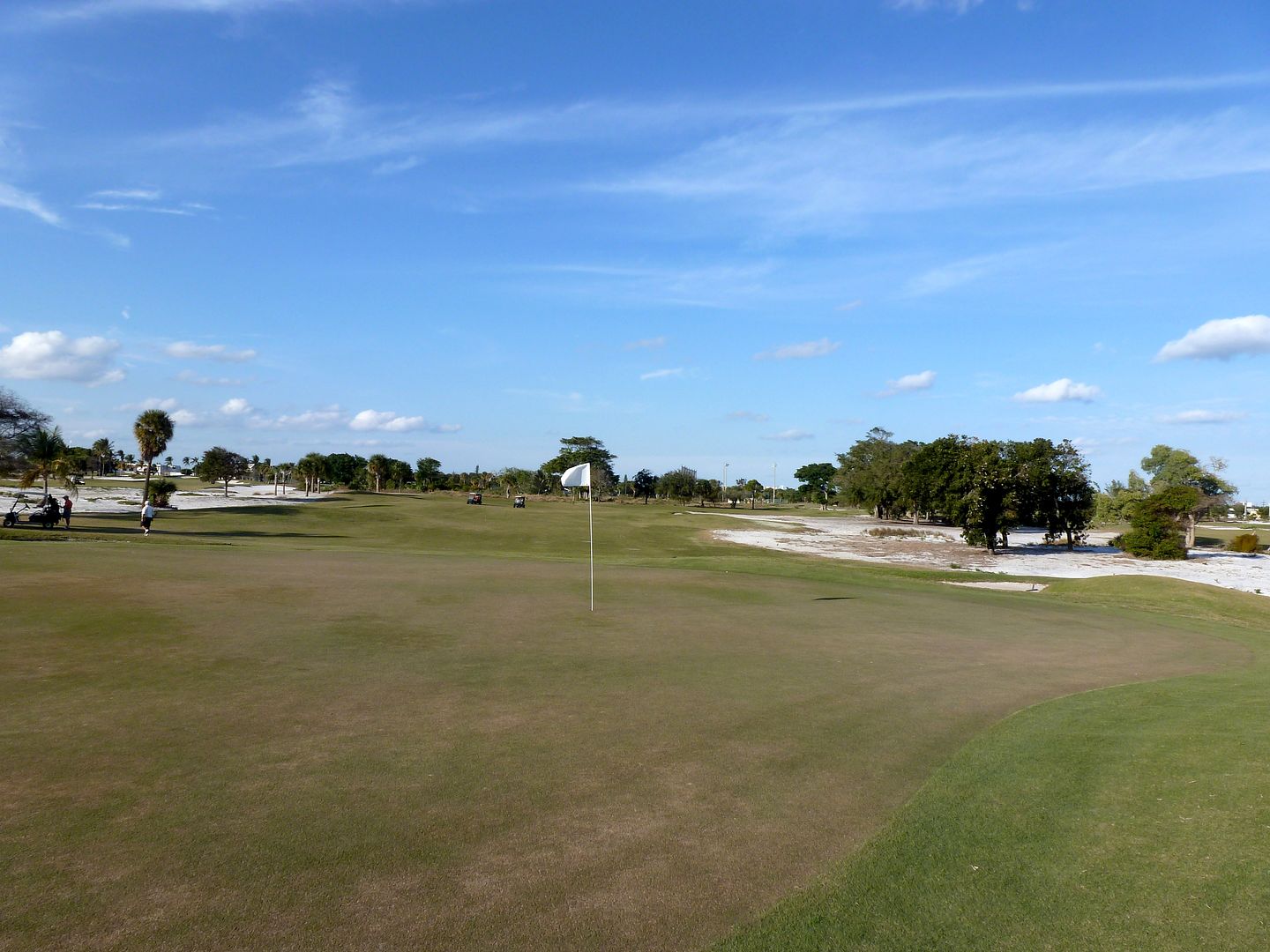
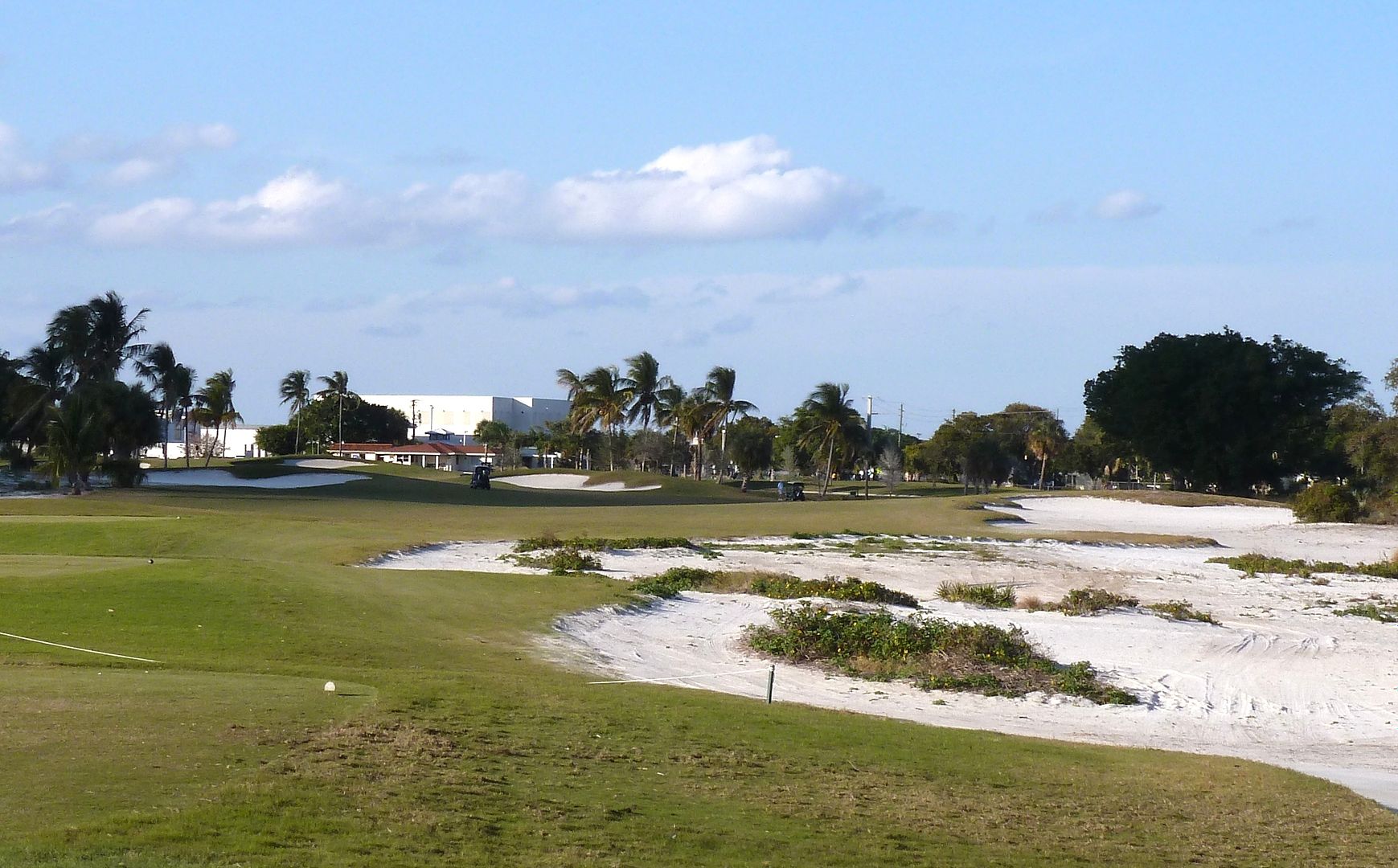
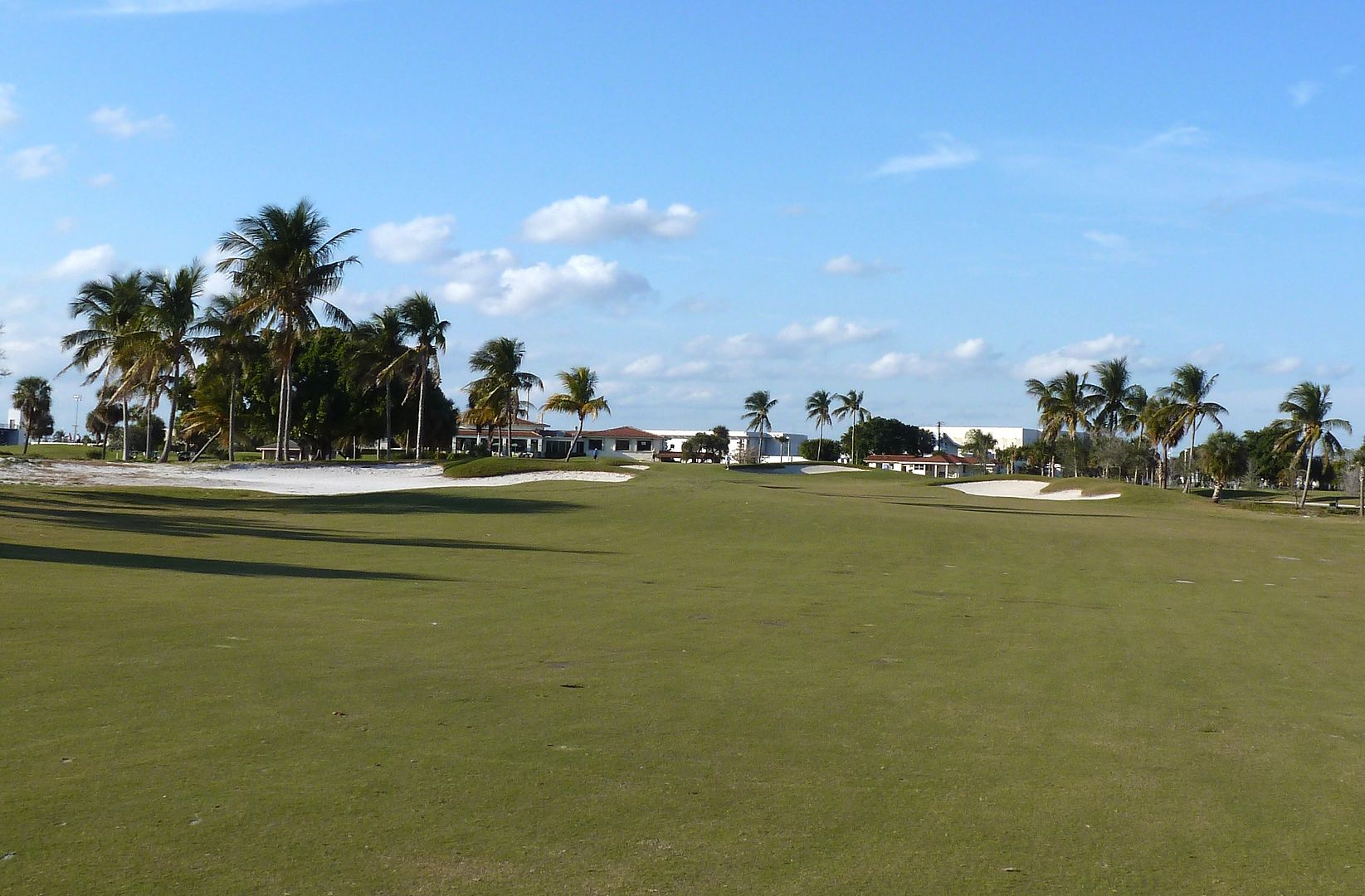
West Palm Beach Municipal Golf Course
West Palm Beach, Florida, United States
Architect: Dick Wilson (1947), Restored by Mark McCumber (2009)
Yardage: 7,002 Yards, Par 72
Rating/Slope: 73.0/128
My Quick Review: Don't let the word 'muni' scare you away -- West Palm Beach GC was a long-time PGA tour stop and is one of the best values in the country.
My Thoughts
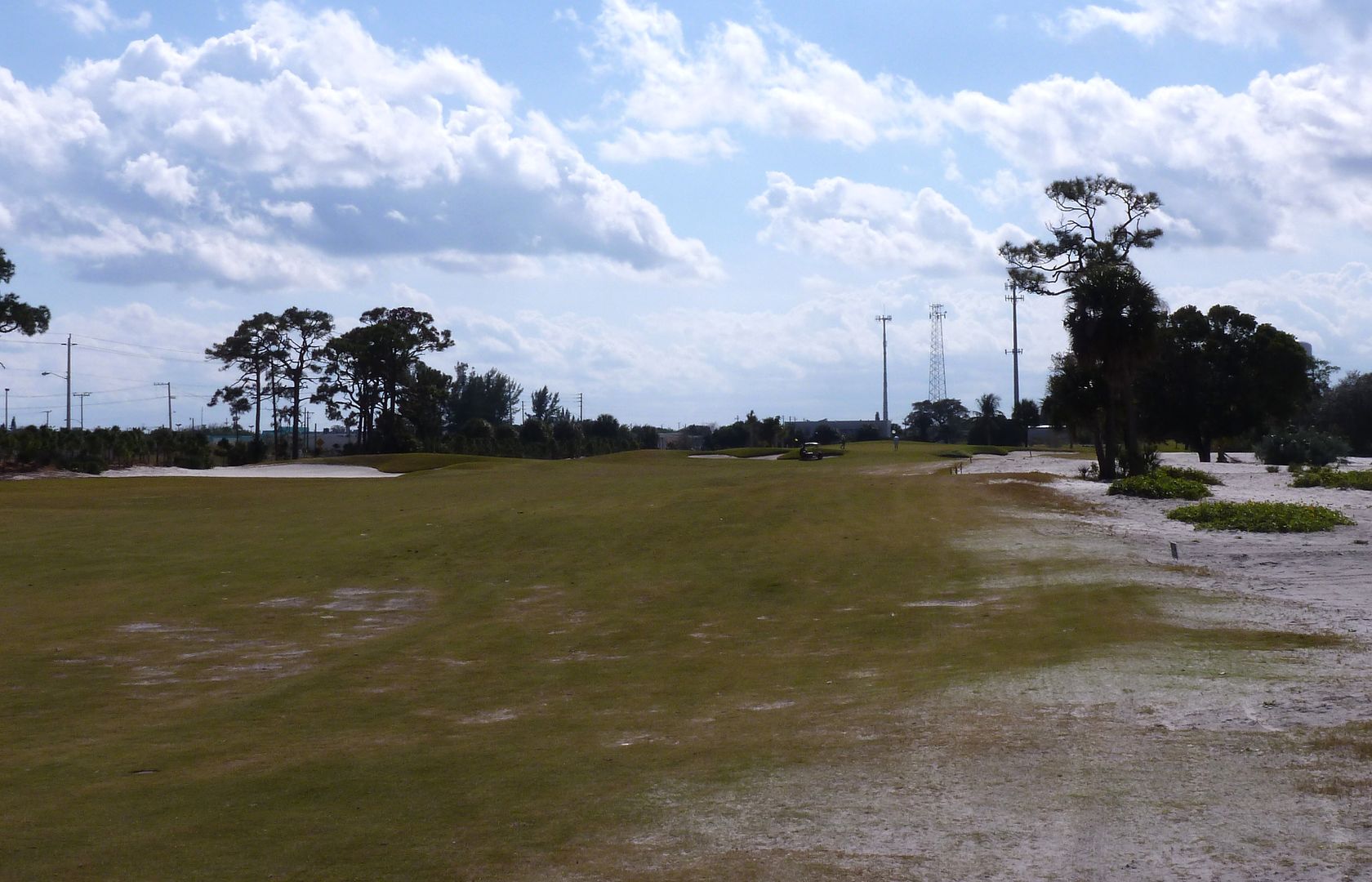
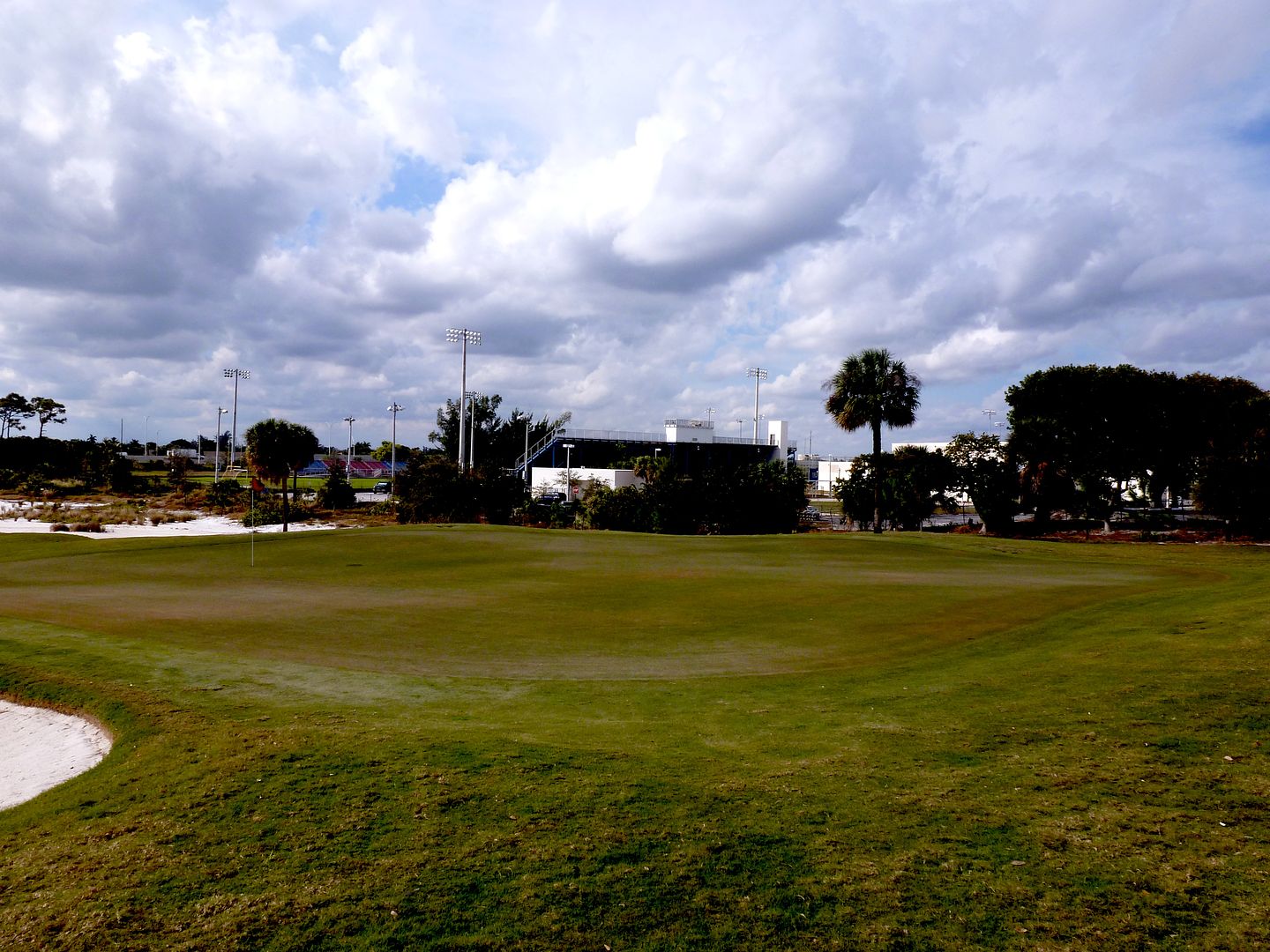
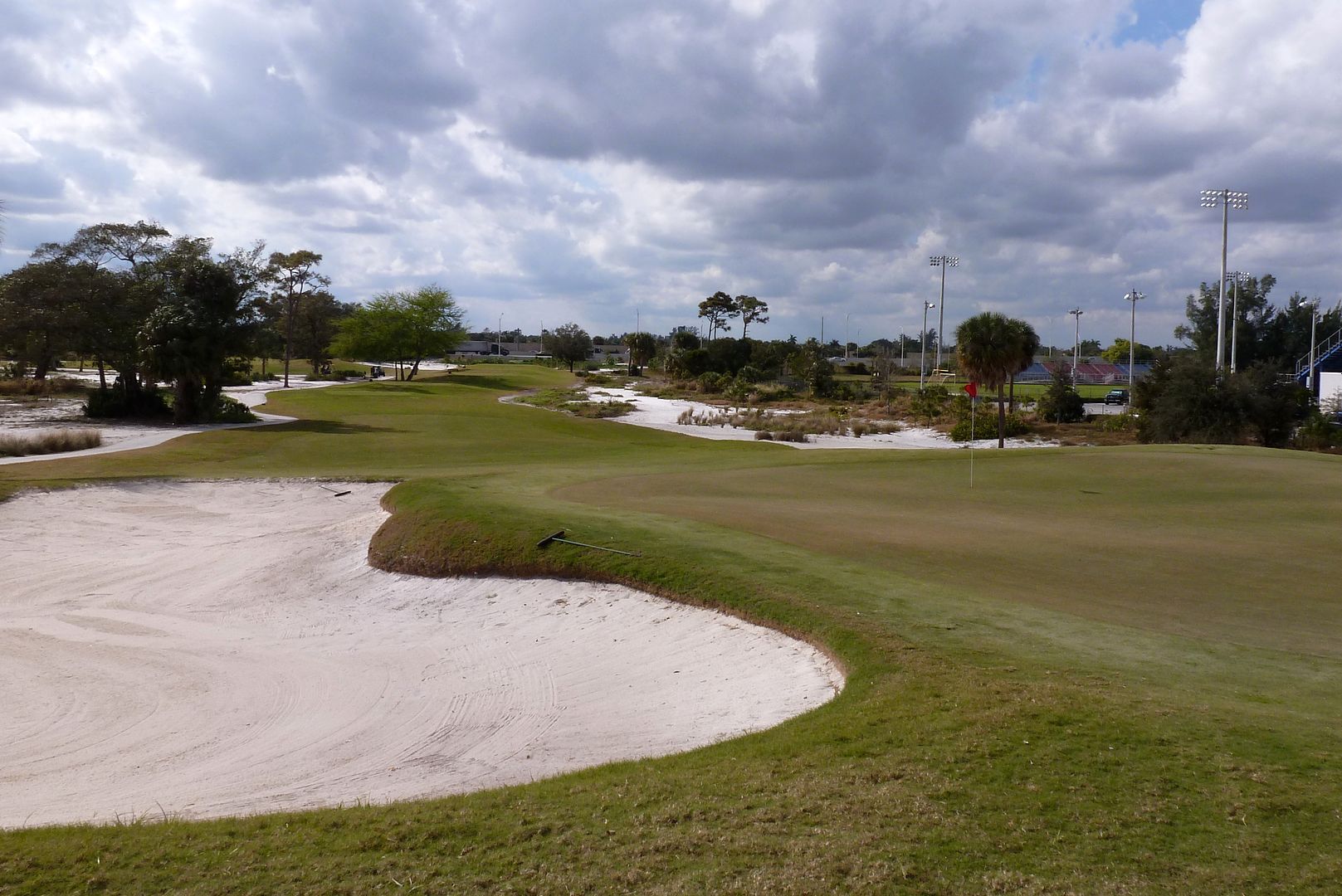
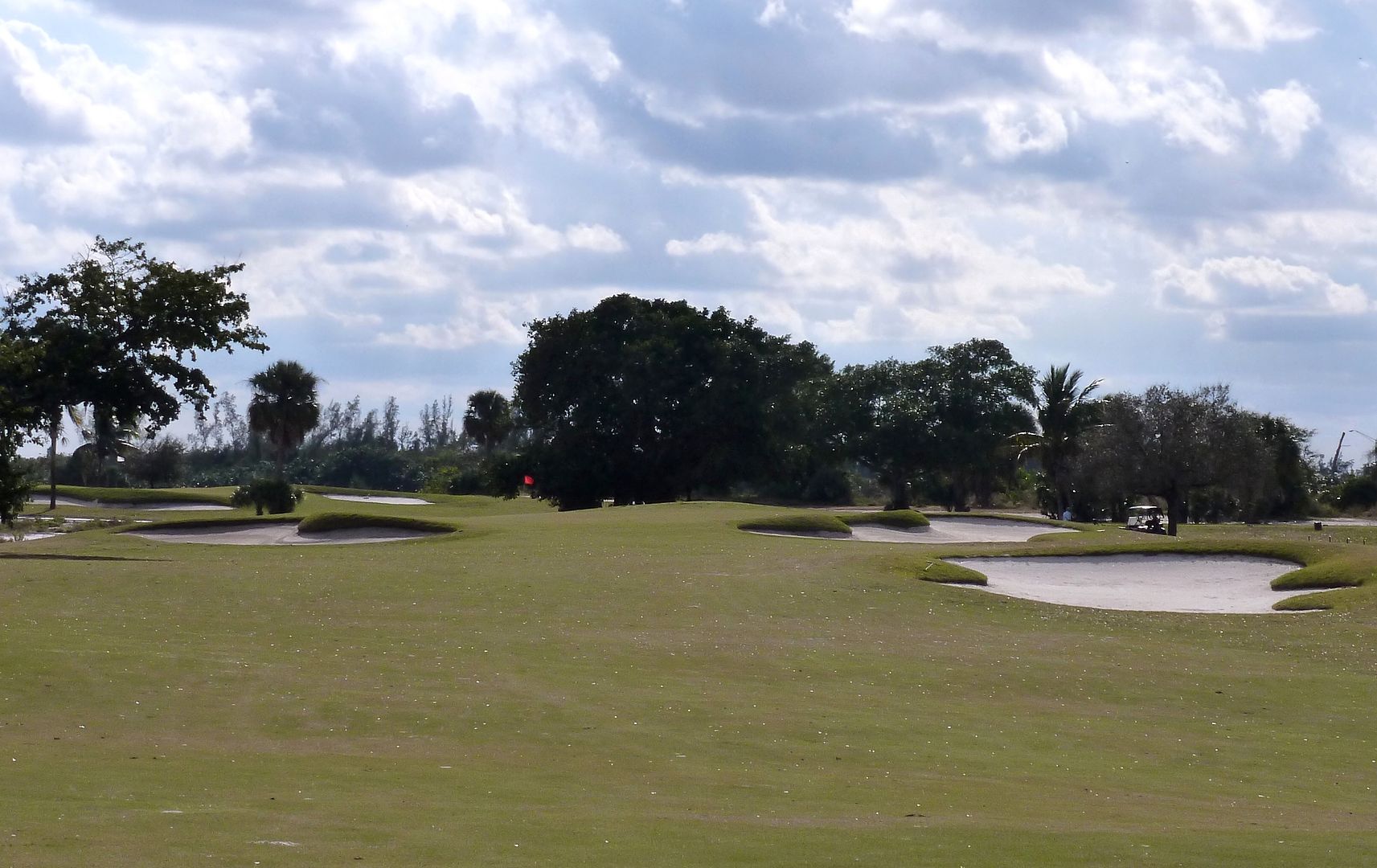
If you like courses that play firm and fast, then WPB is for you. Of the 75 or so courses I've played in South Florida, only one (which must have a massive maintenance budget) had a maintenance meld that encouraged the ground-game like WPB. Sure, the fairway grass is a bit thin in spots, the amount of sand in the bunkers is inconsistent, and the greens are a tad slow, but I would happily choose the conditioning at WPB over so many of the over-watered, over-manicured, bright green courses for which Florida is known.
 |
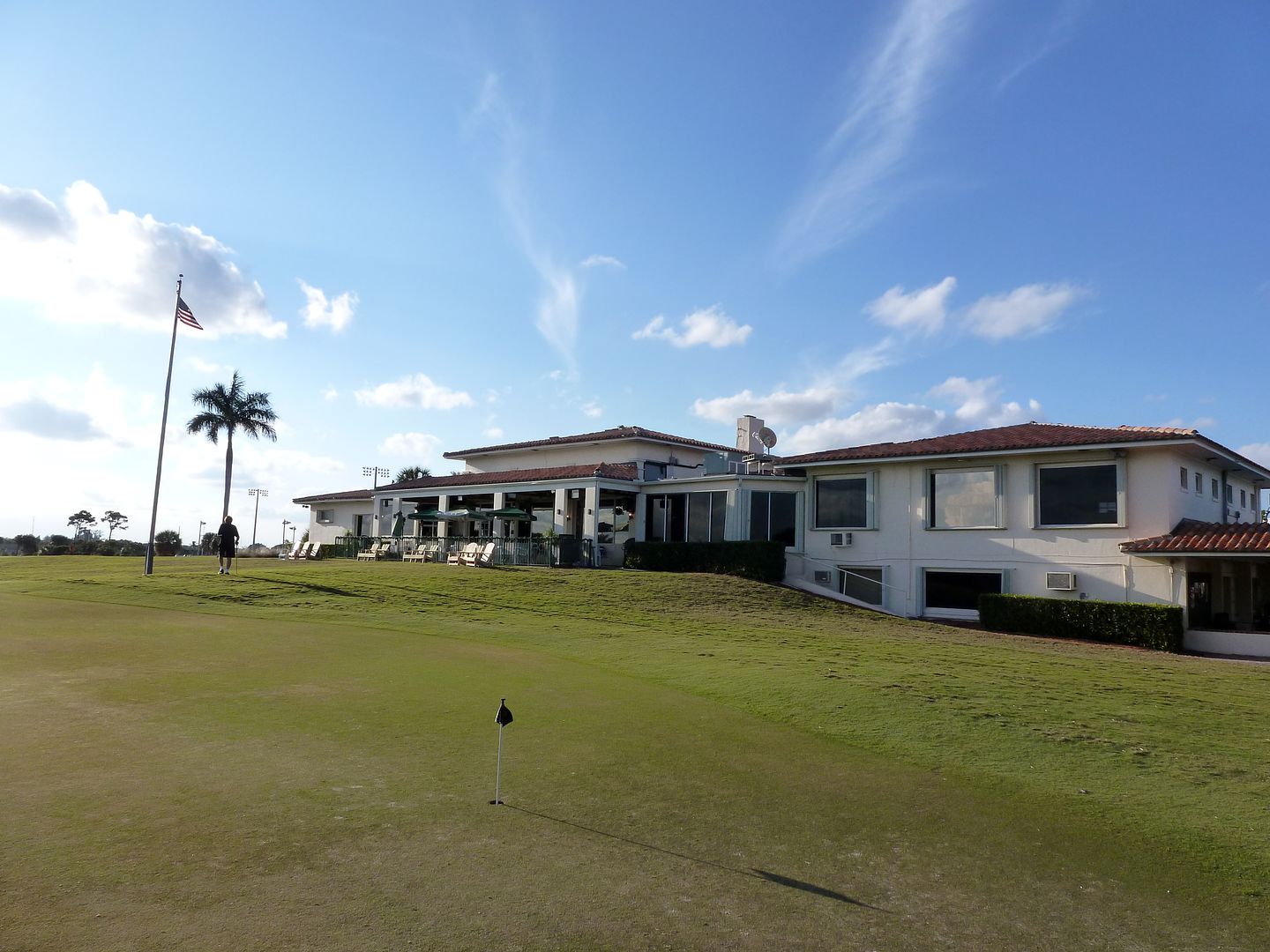
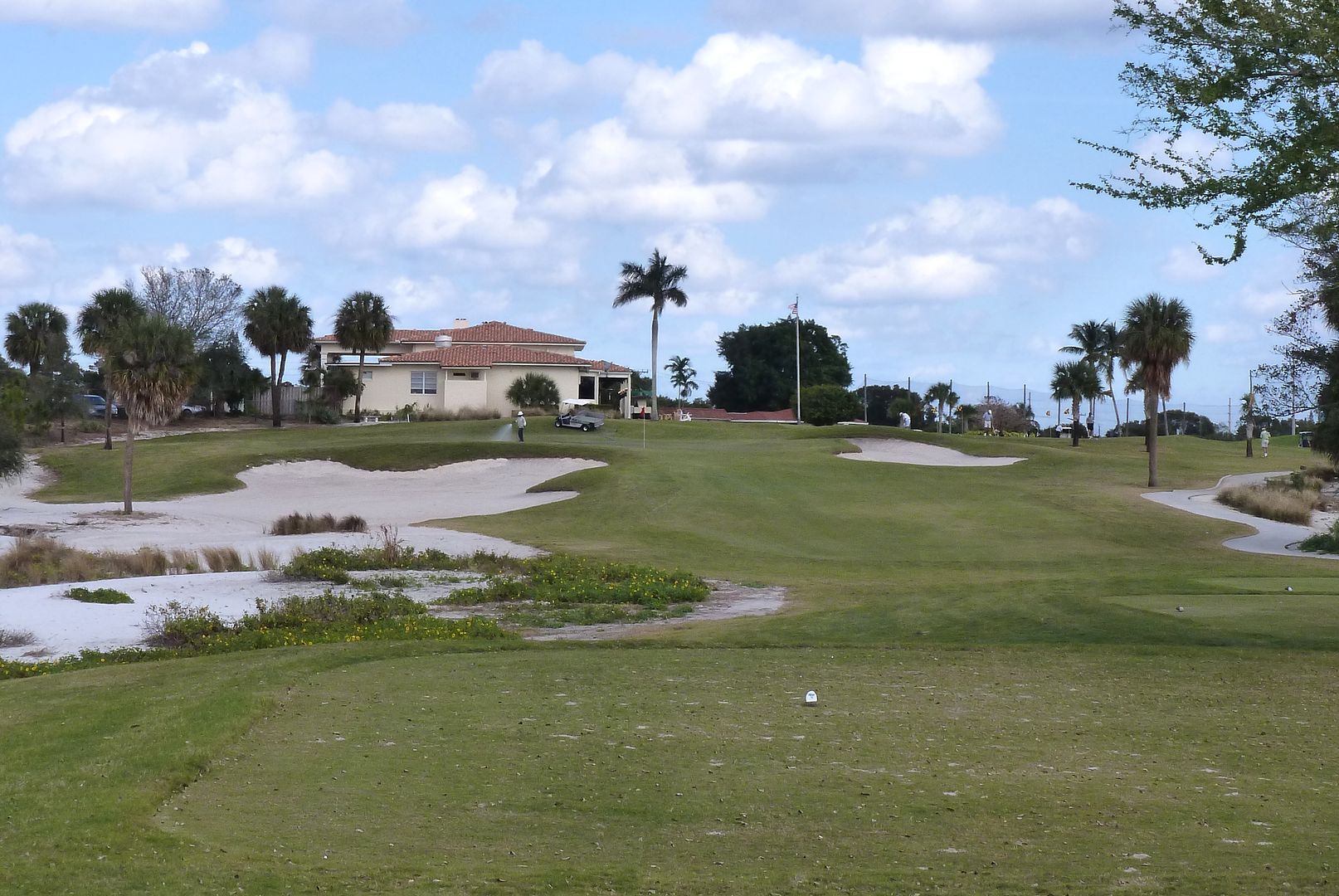
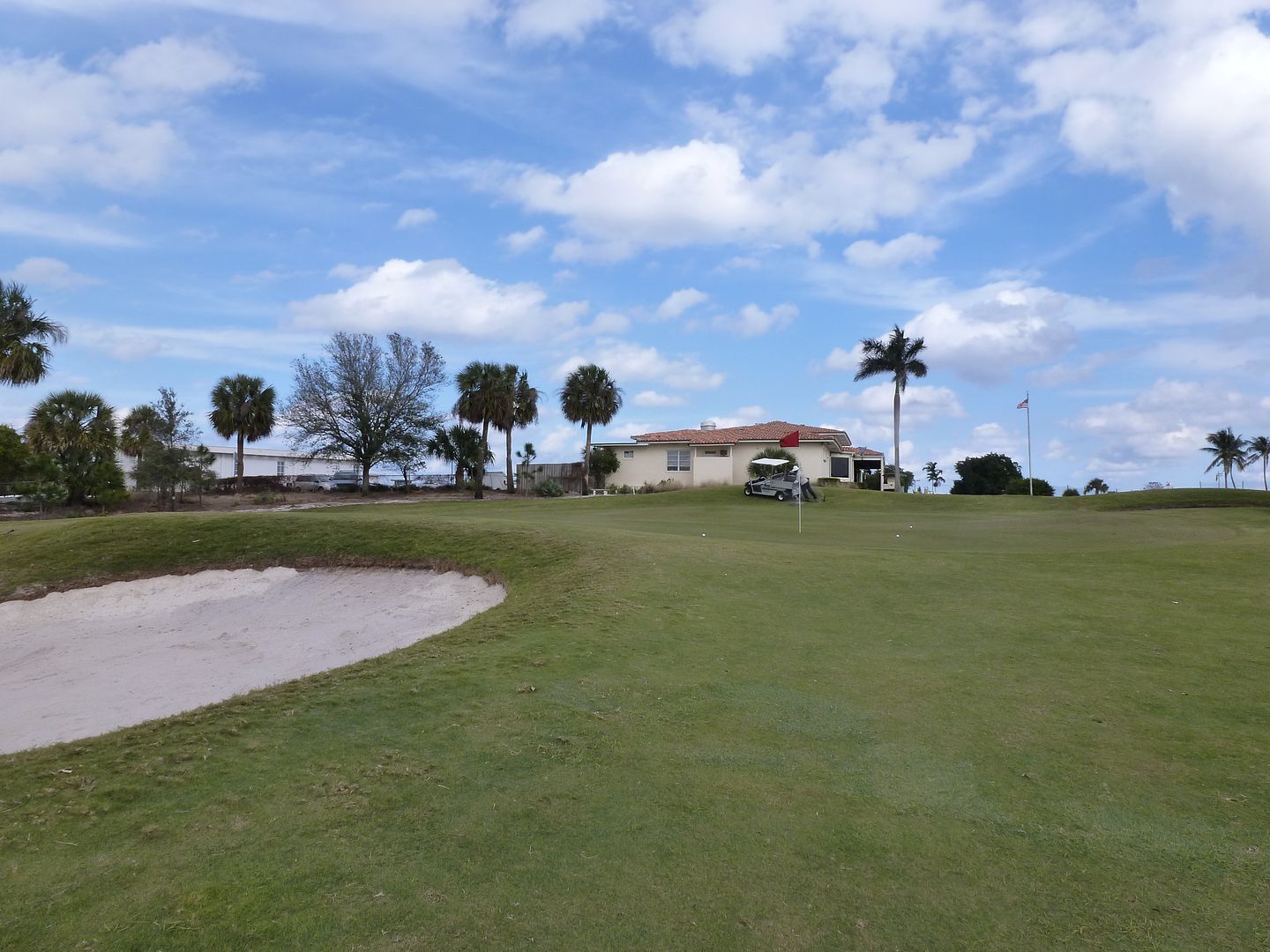
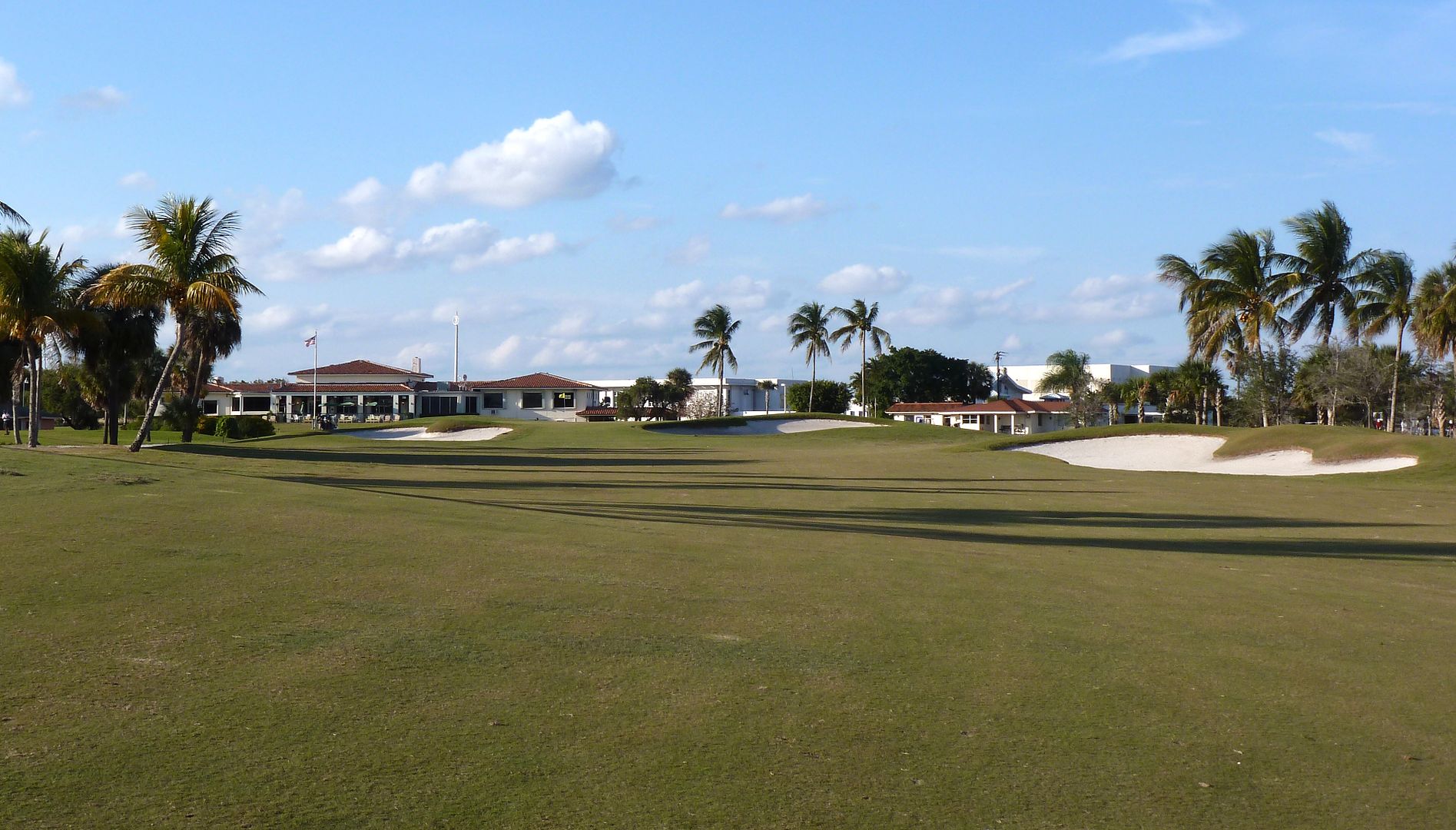
| Clubhouse as seen from Putting Green |
While I really enjoyed WPB, it is far from great. Though there are no holes that are terrible, there are a good number that are very ordinary. The sand bordering every fairway, can add interest to some of these holes, but really they are of little strategic interest. Nevertheless, for $24.00 including cart on EZ Links (though I walked -- nice to have that option), I am convinced this is among the very best values in the entire country.
The routing is adequate -- easily walkable and with fairly effective use of the limited elevation on property, though there were a few too many holes that moved back-and-forth.
Green shaping is a highlight of the golf course, though green contouring is not.
 |
| Tee Marker with WPB Logo |
Holes to Note
Hole 2: Par 5, 588 Yards
After a fairly benign opening hole, the golf course shows it teeth with the very long par-5 2nd. The strong wind blows into the golfer from the left, making the fairly wide fairway difficult to find. To find the fairway, one must aim at the bunker on the left and hope his ball blows into the centre of the fairway, and not so far that it finds the waste area on the right. The golfer willing to sacrifice distance for accuracy can choose to hit his tee shot to the widest part of the fairway short of the bunkering on the left, but this will leave a second shot in the 350 yard area.
 |
| 2nd Tee |
After a good tee shot, the second shot is as simple as any shot on the course. Lots of width, just lay up to the yardage you want -- the second shot is the weak spot on this hole.
 |
| The 2nd at the 2nd |
The approach is played slightly uphill to a green that slopes significantly back-to-front. Two bunkers guard the green, with the one on the left being of some significant depth.
 |
| Approach to the 2nd |
 |
| 2nd from Behind Green |
Hole 4: Par 4, 465 Yards
Though the 4th is long on the card and plays slightly uphill, it is the first time the player will have the wind with him -- downwind and with the firm fairways, this hole will play fairly short. The 4th fairway is extremely wide. The bunkering is a bit unusual, with an out-of-play bunker guarding the beginning of the fairway on the right, and a bunker on the left guarding the ideal angle into the green.
 |
| 4th Tee |
This was the most fun approach on the golf course. Playing straight downwind from 150 yards, and with a large 'kicker' short-right of the green, gauging the yardage is no easy task -- any shot flying onto the green probably will not stop. A chipped 7-iron played up the slope on the right is very fun to watch it bounce, roll and trundle down onto the green -- what is this, Florida or Ireland?
 |
| Approach to the 4th -- Note kicker on the right |
The 4th green among the best greens on the course -- narrow in front and wide in the back, full of small rolls and a more significant ridge separating the front of the green from the back.
 |
| 4th Green |
 |
| 4th from Behind |
Hole 5: Par 4, 326 Yards
Routed in the same direction as the 4th, the 5th also plays straight downwind and is driveable by the bombers. For those willing to lay-back, short of the bunkers that juts into the fairway 80 yards short of the green, the fairway is extremely wide. Golfers hoping to leave only a pitch into the green must challenge the narrow portion of the fairway right of the bunker. The hole would be greatly improved if at least one of those front bunkers were removed to further entice players to try to drive the green.
 |
| 5th Tee |
 |
| 5th Fairway - Note the Massive Width Short of the Bunker |
 |
| 5th Approach Short of Bunker |
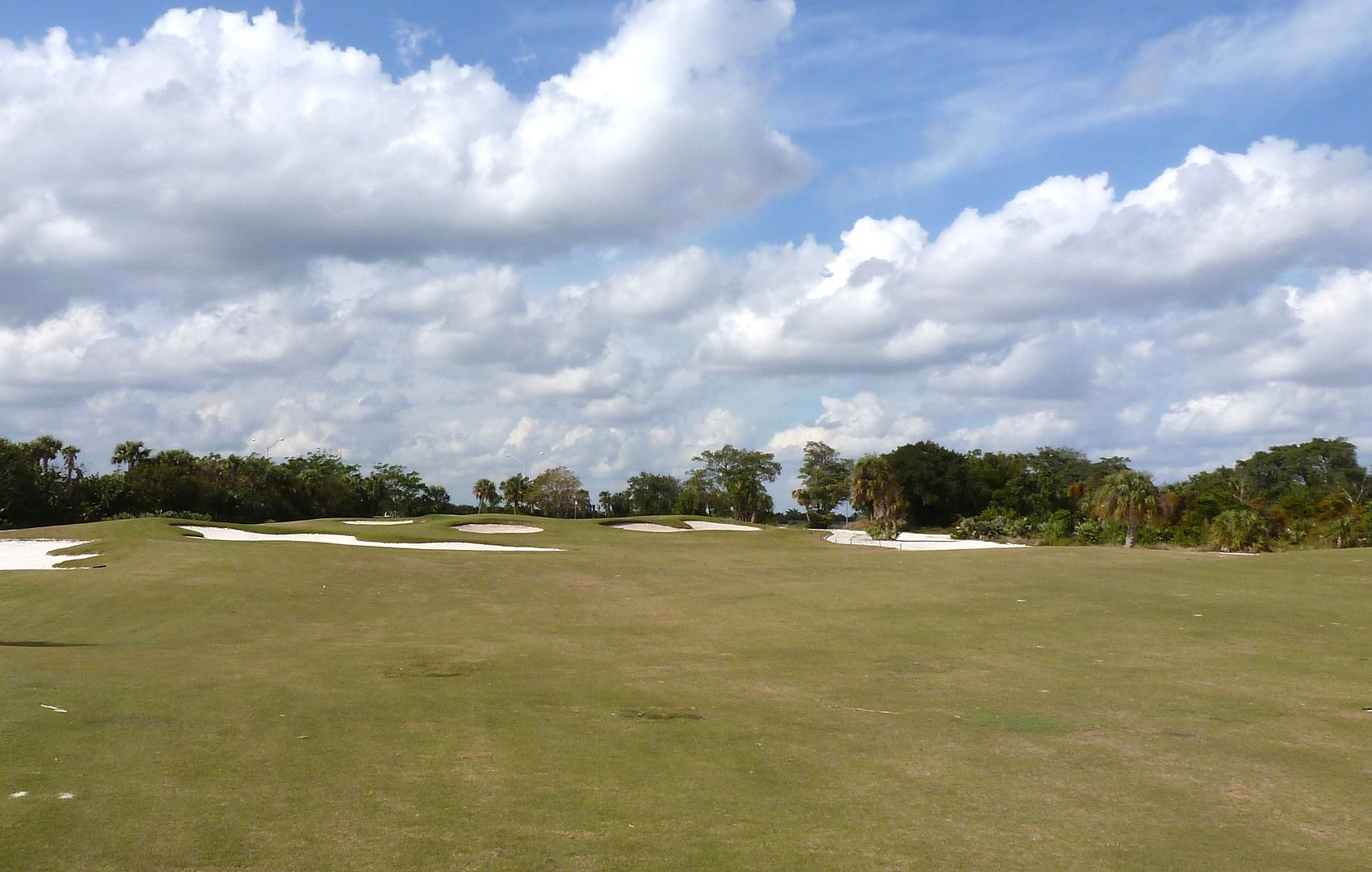
The pitch to the 5th is not so simple, playing uphill and straight downwind to a green that slopes away from the golfer. Perhaps laying back in the fairway was the play?
 |
| 5th from Behind Green |
Hole 7: Par 3, 225 Yards
As a golfer who has seen many golf courses, when I see a 225 yard par-3 (200 yard from the member's tee), I expect it play downhill and/or downwind. Not so at WPB! The 7th is a brute of a hole, playing uphill, into the wind, with massively deep bunkering and the most contoured green on the course!
 |
| 7th Tee |
 |
| Deep Bunkers Guard the Front of the 7th Green |
The green has a very 'wavy' feel as ridges run through the green, separating it into three bowls and a pinnable and very difficult centre ridge.
 |
| 7th Green |
 |
| 7th from Behind-Right |
Hole 10: Par 5, 478 Yards
The 10th tee shot is a lesson in simple, strategic design -- challenge the bunker on the right for the shorter approach with the best angle, or play away from the bunker to the wide part of the fairway and leave a more difficult second shot. If the bunker on the right is carried (about 280) yards, the player will find a significant downslope, which would make this par-5 look silly, leaving nothing more than 150 yards into the green.
 |
| 10th Tee |
 |
| Second shot on the 10th from Top of Hill -- Bunker on the Right is Bizarrely Placed |
 |
| 10th Green |
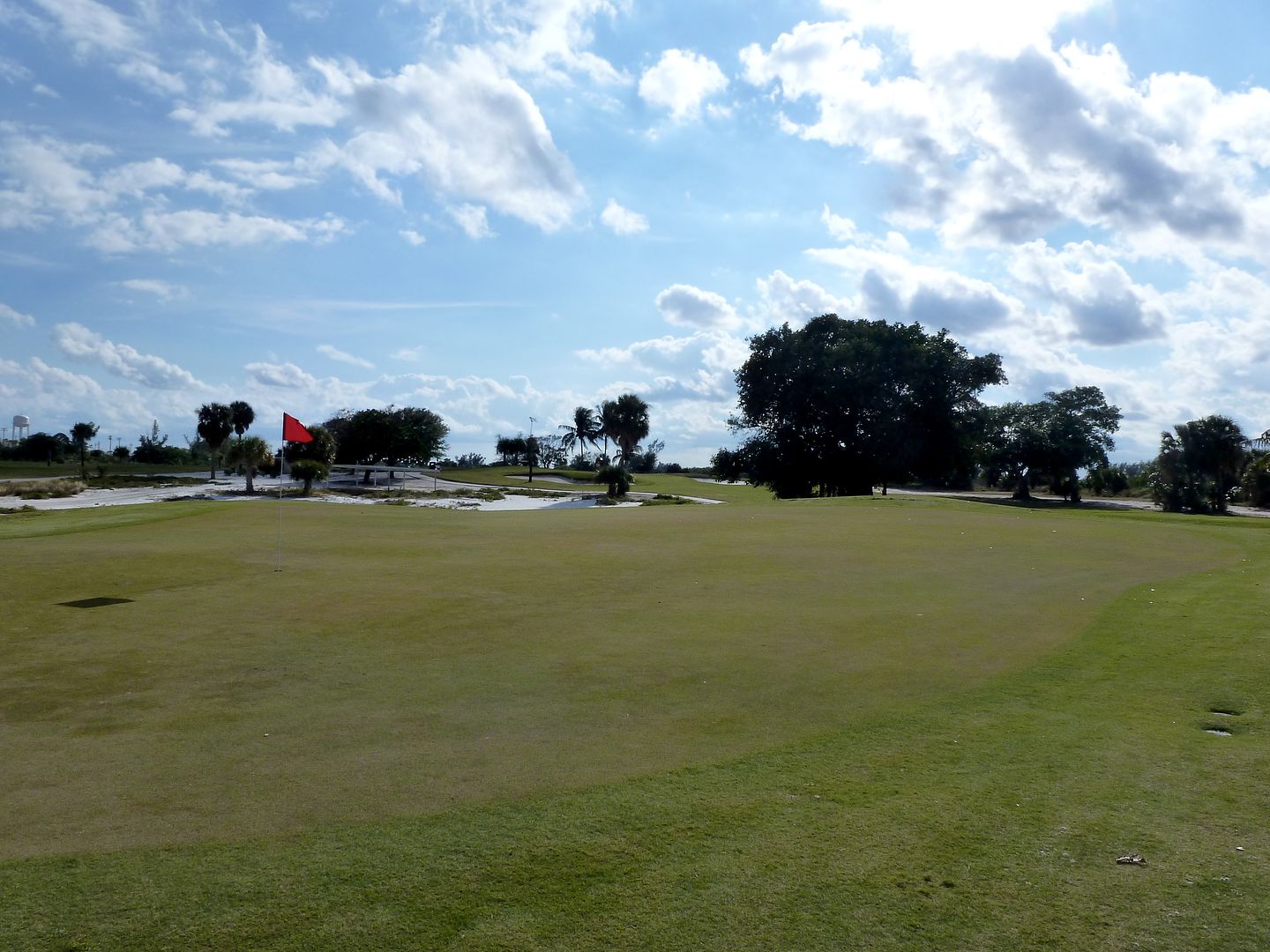
The 10th green is dull -- large and simply contoured, and guarded only by two small front bunkers. Or is it? A view from the 11th green shows a deep run-off into the waste area long-left of the green -- don't miss there!
 |
| 10th from 11th Green |
Hole 12: Par 5, 518 Yards
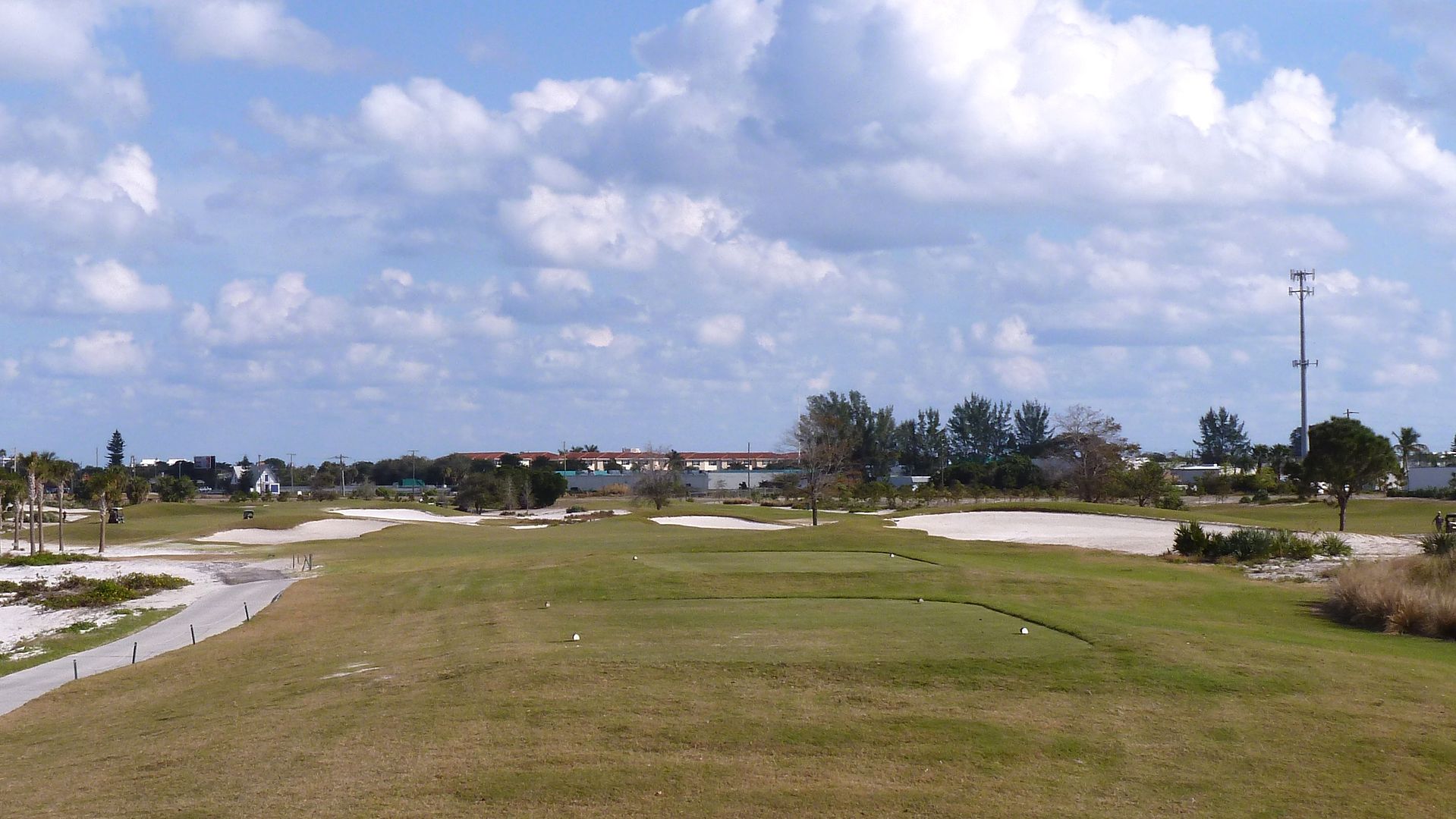
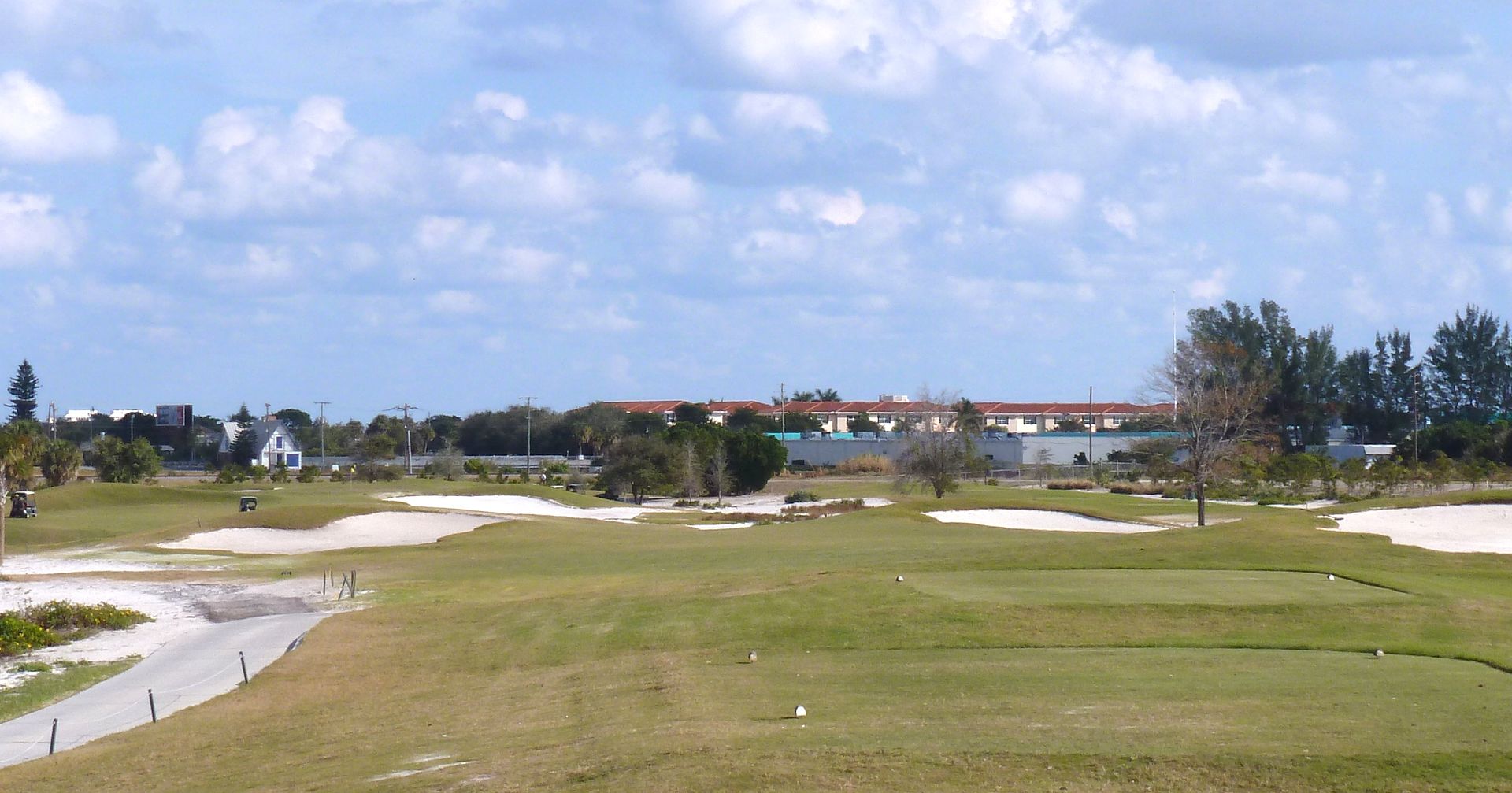
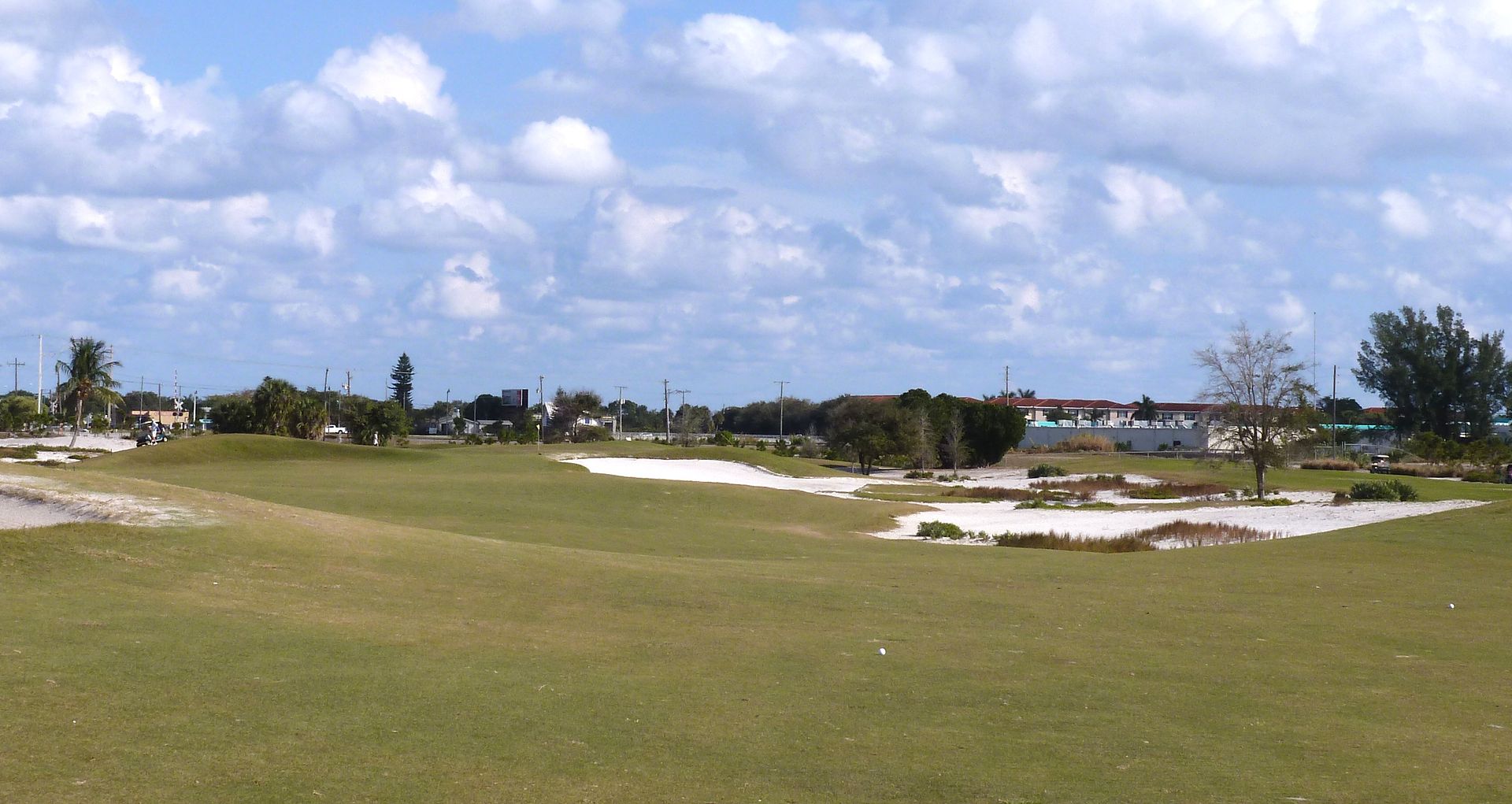
The 12th is a great example of a hole with the 'bunkers everywhere' appearance. Though the bunkers are staggered, and some of the bunkering is actually waste area some 400 yards from the tee, it appears as though there are bunkers no matter what the line off the tee. Of the bunkers in play, the golfer must give the most consideration to the two bunkers that pinch the fairway 250 yards from the green -- lay-up to the them and reaching the green in two is impossible; challenge/carry them and the golfer catches a downslope and will have no more than 200 yards into the green.
 |
| 12th Tee |
 |
| 12th Tee Zoomed In |
For most, the second shot will be played from the top of the hill, short of the fairway bunkers. The goal is to avoid the waste area on the right. Lay-up as close to the green as you like, but beware, the fairway narrows the closer to the green the golfer gets.
 |
| 12th Second Shot |
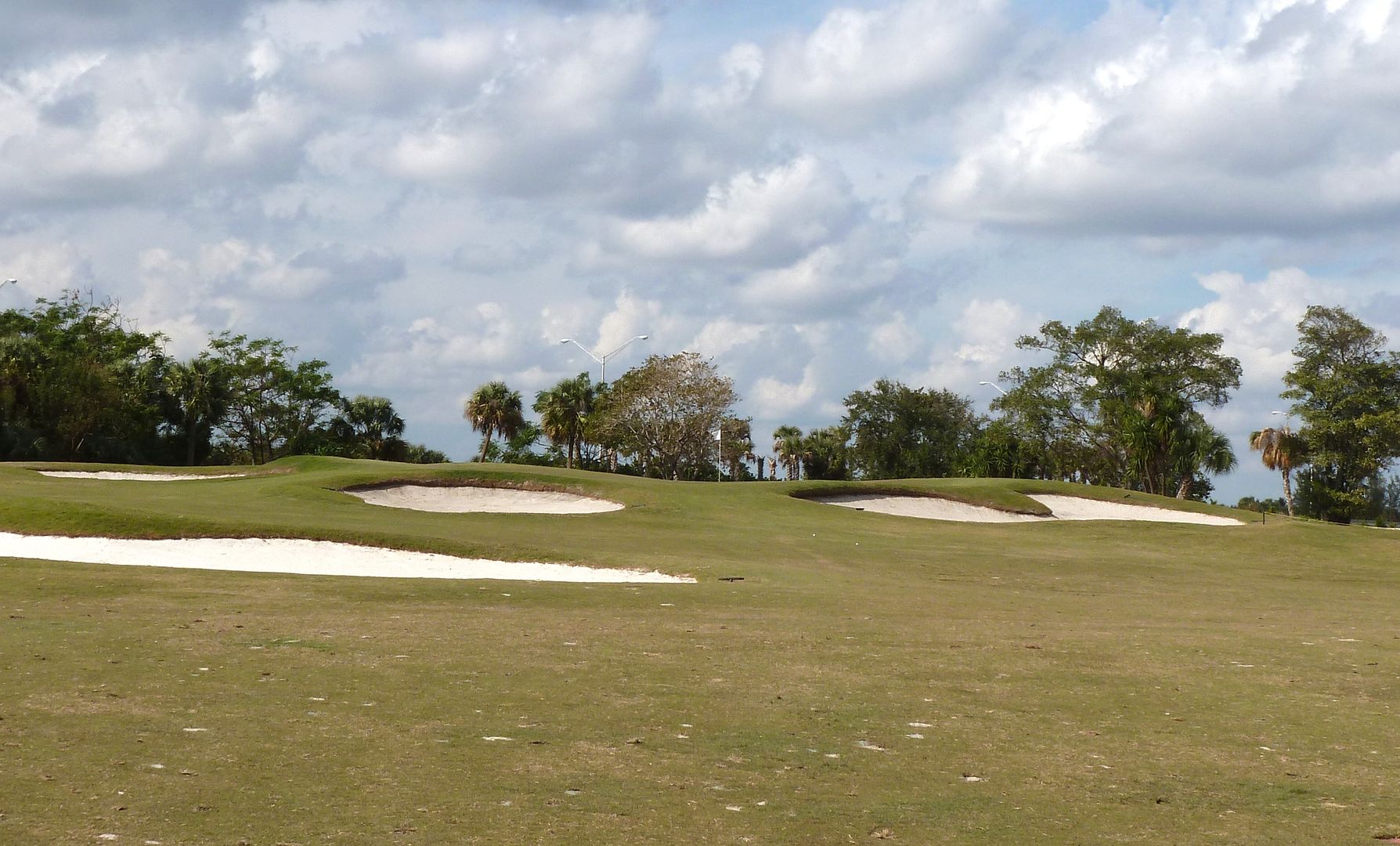
The approach to the 12th is played over a front bunker and a very cool-looking grass bunker.
 |
| 12th Approach |
 |
| Grass Bunkers Short of 12th Green |
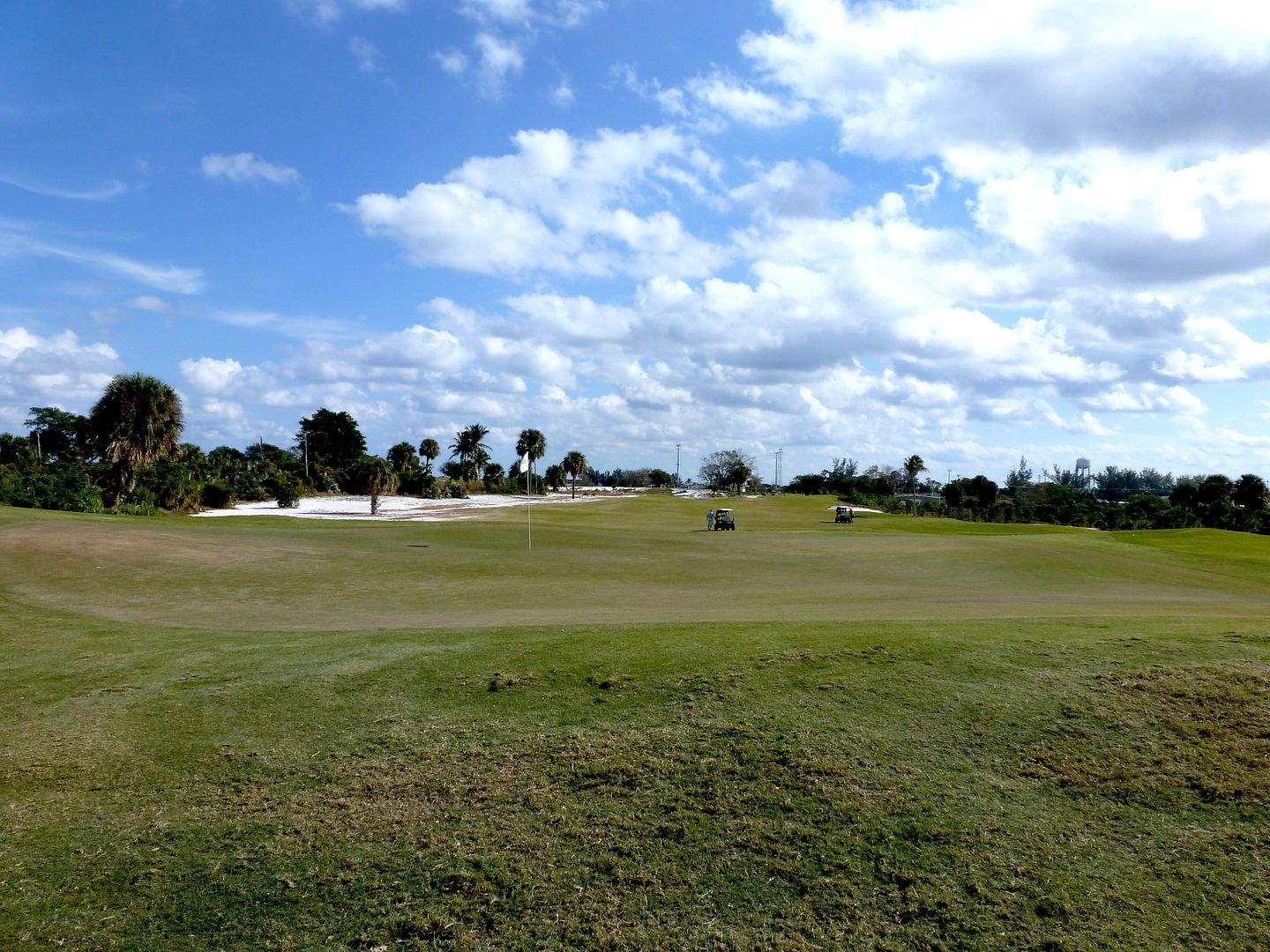
The 12th green is very shallow and very sloped from back-to-front. The green-shape is very interesting, resembling a, well, you can work it out...
 |
| 12 Green |
 |
| 12th from Behind Green |
Hole 17: Par 4, 388 Yards
The 17th is a decent mid-length par-4, but I think it could be a very good short par-4 if you move up a set (or two) of tees as I did. The pictures are taken from the 350 yard tee box. From there, there is a real decision whether to play to the wide portion of the right, or to challenge the bunker on the left to leave just a pitch into the green.
 |
| 17th Tee |
 |
| 17th Tee Zoomed In |
The approach to the 17th is fairly simple provided the golfer is coming from the fairway. Boring bunkering.
 |
| 17th Approach |
 |
| 17th from Behind -- Note 'Sunday Pin Position" on Left Edge of Green |
Hole 18: Par 5, 565 Yards
The tee shot at the 18th is a fairly difficult one. The fairway is narrower than many others on the course, though perhaps this is because the hole generally plays straight downwind.
 |
| 18th Tee |
The golfer must choose whether to play to the wide part of the fairway on the left, or to carry the waste area on the right for the ideal line to lay up or go for the green.
 |
| 18th Tee Zoomed In |
The second shot is played over the corner of the fairway bunker, with the main goal of avoiding the fairway bunker on the right side of the fairway, 100 yards short of the green.
 |
| 18th Second Shot |
The approach to the 18th is played to yet another raised green, guarded by bunkers short left and right.
 |
| 18th Approach |
 |
| 18th from Behind |